Concrete Landscape Edging vs Traditional Landscape Borders: Which Is Better?

When planning a landscaping project, homeowners often spend significant time choosing plants, mulch, decorative stone, and outdoor features. However, one important decision is frequently overlooked: selecting the right landscape border.
Landscape borders play a critical role in defining outdoor spaces, separating lawn areas from planting beds, and creating a polished appearance throughout the property. While traditional materials such as plastic, metal, wood, and pavers remain common choices, concrete landscape edging has become increasingly popular among homeowners seeking a long-lasting and attractive solution.
So which option is better?
For most homeowners looking for durability, curb appeal, and minimal maintenance, concrete landscape borders offer significant advantages over traditional edging materials. Understanding the differences between these options can help you make the best investment for your property.
Why Landscape Borders Matter
Landscape borders do much more than create visual separation.
Properly installed edging helps:
- Define flower beds
- Contain mulch and decorative stone
- Prevent grass encroachment
- Improve landscape organization
- Reduce maintenance requirements
- Enhance curb appeal
Without effective borders, even beautiful landscaping can begin to look untidy as materials shift and lawn growth spreads into planting areas.
Choosing the right edging material can have a major impact on both the appearance and maintenance needs of your landscape.
Common Types of Traditional Landscape Borders
Many homeowners are familiar with traditional edging materials because they are readily available at garden centers and home improvement stores.
The most common options include:
- Plastic edging
- Metal edging
- Wood landscape timbers
- Brick borders
- Paver edging
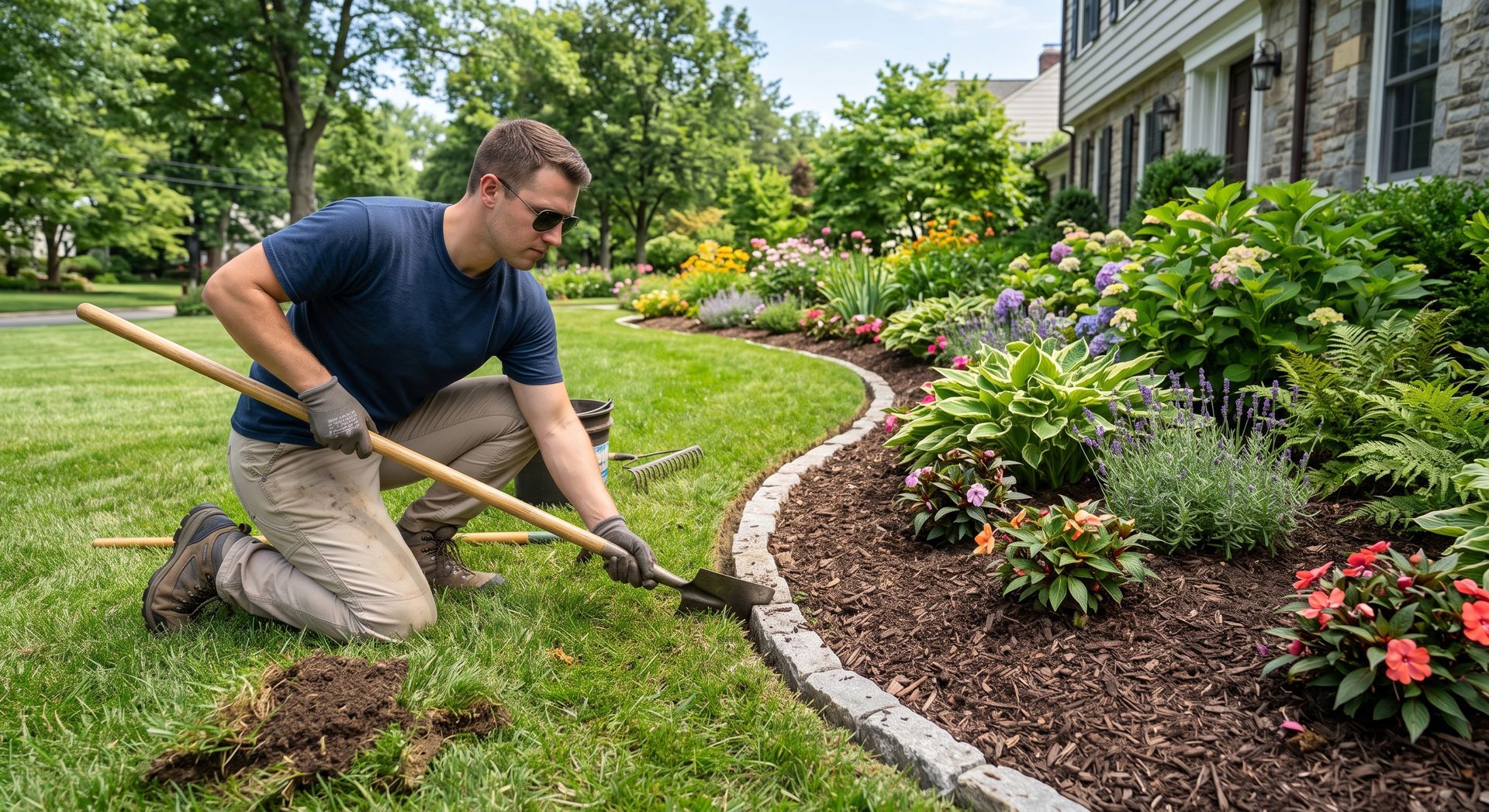
- Natural stone borders
Each option offers certain benefits, but they also come with limitations that should be considered before installation.
Plastic Landscape Edging
Plastic edging remains one of the most widely used landscape border materials because of its affordability.
Advantages
Plastic edging offers:
- Low initial cost
- Easy installation
- Availability at most retailers
- Flexible shaping
For small DIY projects, plastic edging may seem like an appealing option.
Disadvantages
However, homeowners often encounter problems over time.
Common issues include:
- Cracking
- Fading
- Brittleness
- Movement caused by frost
- Loose stakes
- Warping
Michigan's changing seasons can accelerate the deterioration of plastic materials, leading to frequent repairs and replacement.
Metal Landscape Edging
Metal borders are often chosen for their clean and modern appearance.
Advantages
Benefits of metal edging include:
- Thin profile
- Sharp, defined lines
- Greater durability than plastic
- Flexible design possibilities
Metal edging can create a neat and professional look when properly installed.
Disadvantages
Despite these benefits, metal borders are not without challenges.
Potential drawbacks include:
- Rust and corrosion
- Bending
- Ground movement
- Exposed edges
- Limited decorative options
Over time, metal edging may require maintenance to preserve its appearance and functionality.
Wood Landscape Borders
Wood timbers and treated lumber have long been used in landscape design.
Advantages
Wood borders can provide:
- Natural appearance
- Rustic charm
- Easy customization
- Readily available materials
Some homeowners appreciate the warm, organic look of wood.
Disadvantages
Unfortunately, wood is vulnerable to outdoor conditions.
Common concerns include:
- Rot
- Insect damage
- Warping
- Splitting
- Deterioration from moisture
Even treated lumber has a limited lifespan when exposed to Michigan weather conditions.
Brick and Paver Borders
Brick and paver edging can create a decorative appearance and add character to a landscape.
Advantages
Benefits include:
- Attractive appearance
- Variety of styles
- Color options
- Traditional aesthetic
These materials are often used to complement patios and walkways.
Disadvantages
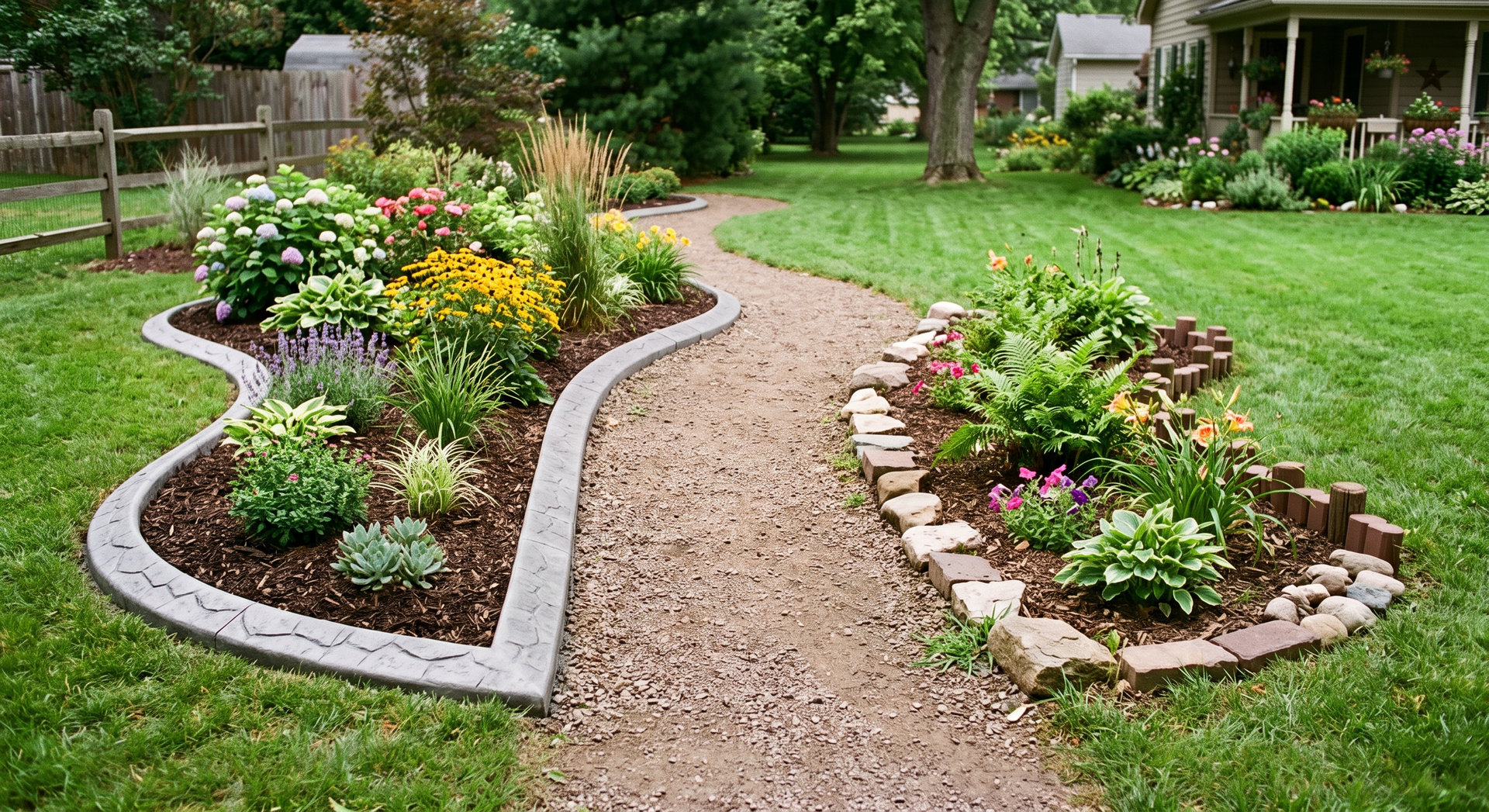
However, individual units can shift over time.
Challenges may include:
- Uneven settling
- Weed growth between joints
- Movement during freeze-thaw cycles
- Ongoing maintenance
Periodic adjustments may be required to maintain a clean appearance.
What Makes Concrete Landscape Borders Different?
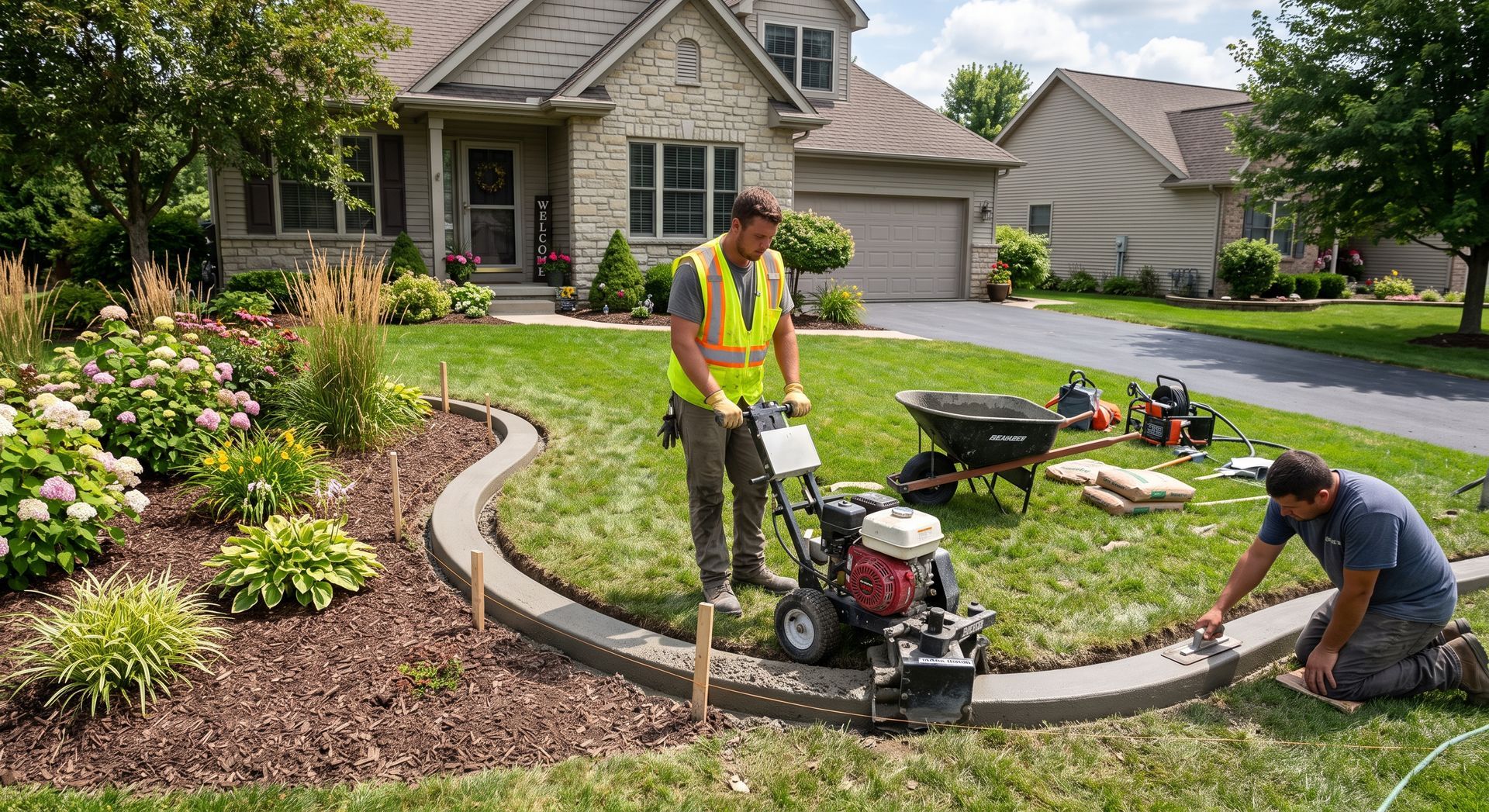
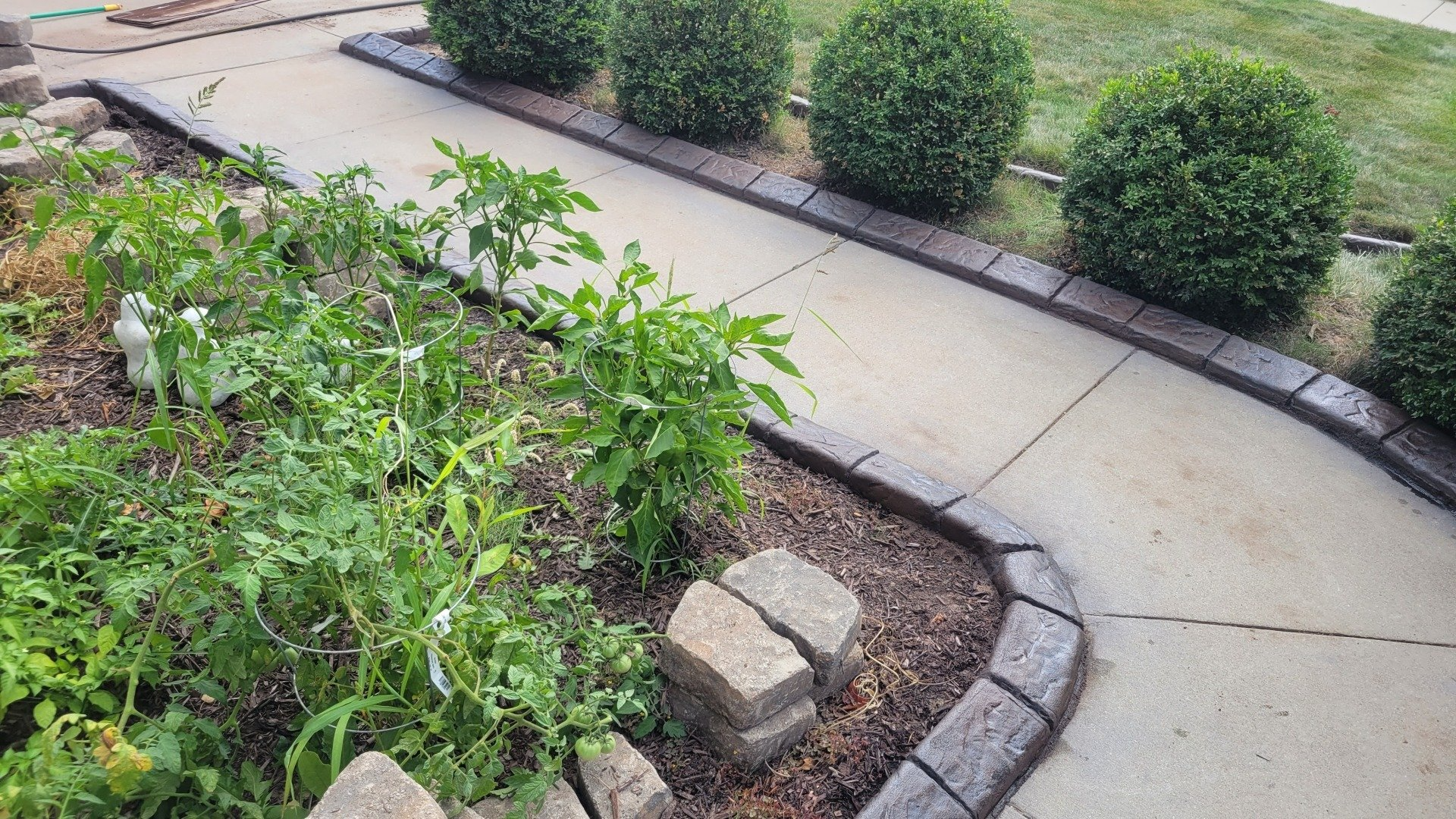
Concrete landscape edging differs from traditional borders because it is installed as a continuous structure rather than individual pieces.
This one-piece design provides significant advantages in terms of durability, appearance, and performance.
Unlike sectional products, continuous concrete borders eliminate many of the weak points commonly found in traditional edging systems.
Advantages of Concrete Landscape Borders
Exceptional Durability
One of the primary reasons homeowners choose concrete landscape edging is its long lifespan.
Professionally installed concrete borders can withstand:
- Heavy rainfall
- Snow accumulation
- Freeze-thaw cycles
- Lawn maintenance equipment
- Soil pressure
This durability helps reduce the need for future repairs and replacement.
Minimal Movement
Many traditional edging materials shift over time.
Concrete borders remain stable because they are installed as a continuous structure.
This stability helps preserve:
- Smooth curves
- Consistent alignment
- Professional appearance
- Defined landscape boundaries
Homeowners spend less time fixing borders and more time enjoying their landscapes.
Decorative Design Options
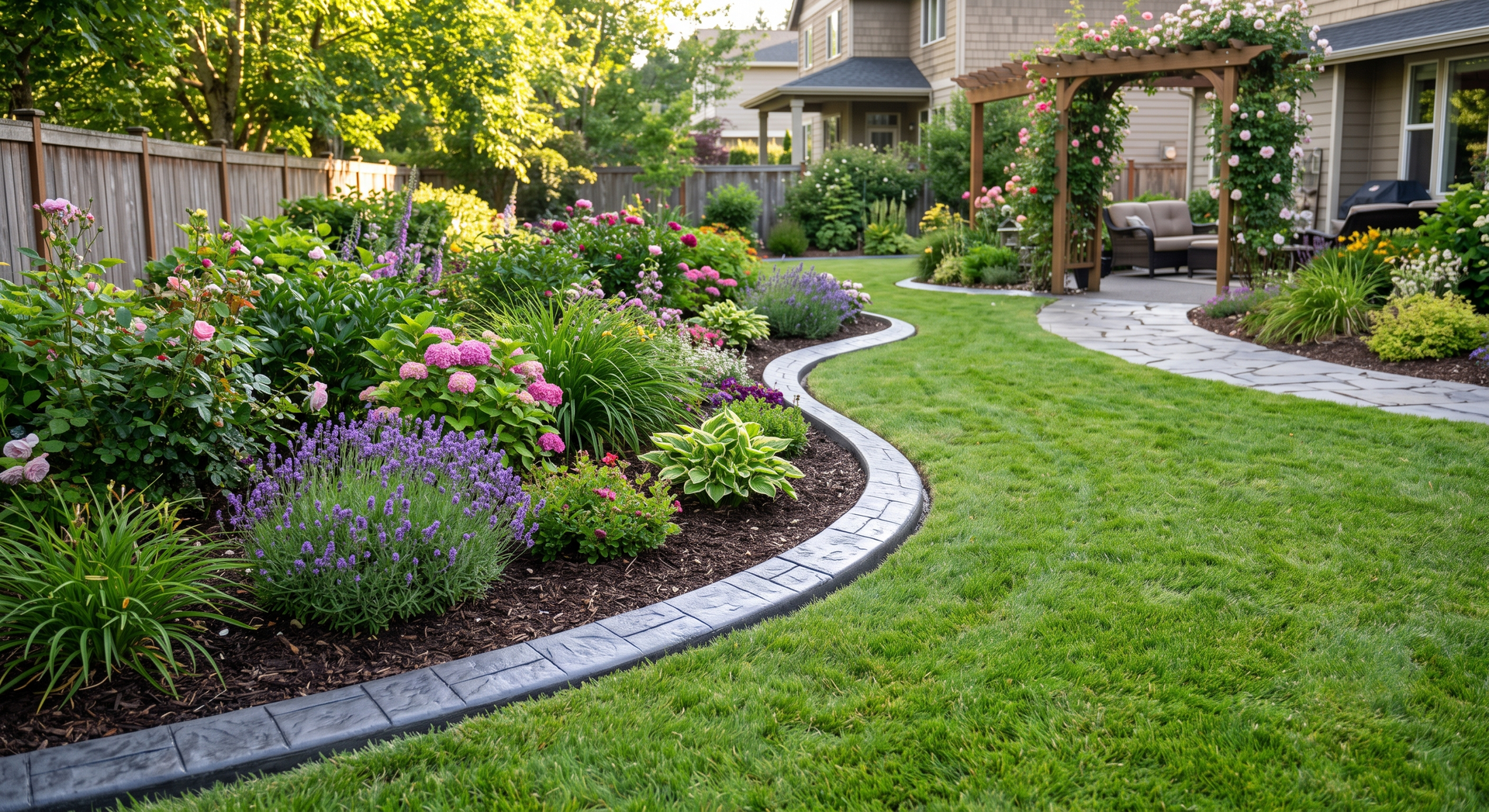
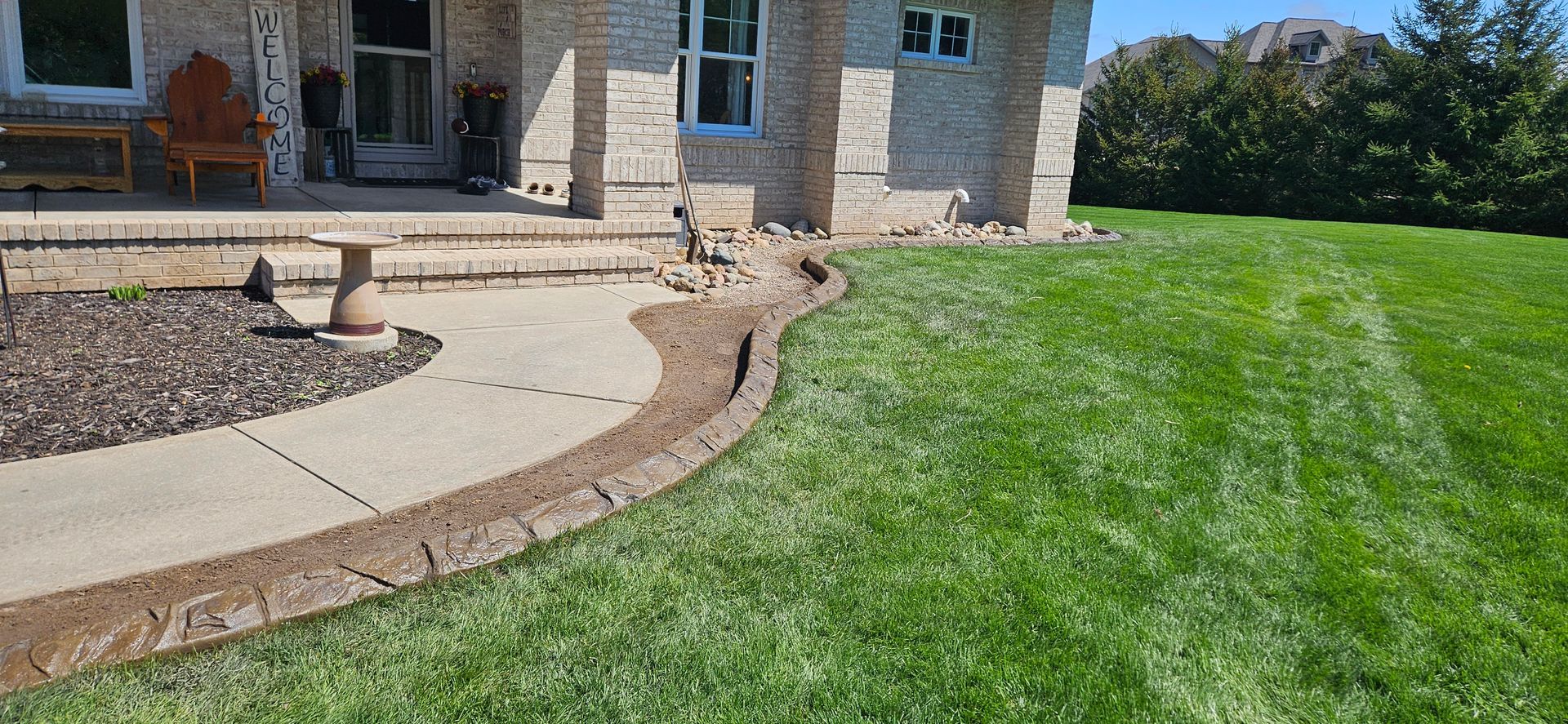
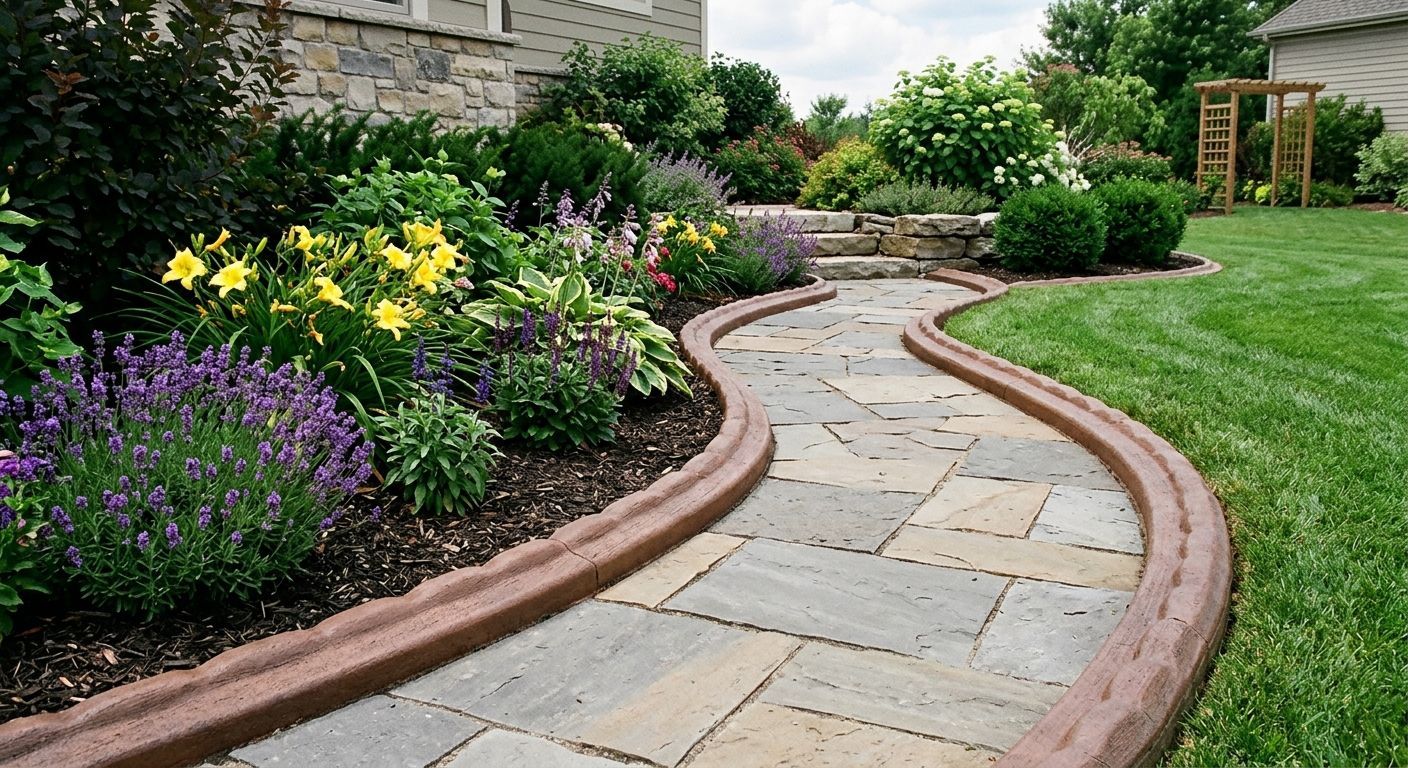
Concrete edging is available in a variety of decorative styles.
Popular options include:
- Colored concrete
- Stamped finishes
- Textured surfaces
- Custom curves
- Decorative profiles
These customization opportunities allow homeowners to create landscape borders that complement their property's overall design.
Low Maintenance
Traditional borders often require ongoing upkeep.
Common maintenance tasks include:
- Replacing broken sections
- Reinstalling stakes
- Straightening shifted materials
- Controlling weeds between joints
Concrete landscape edging minimizes these issues and requires very little ongoing attention.
Comparing Long-Term Value
When evaluating landscape borders, it is important to consider long-term costs rather than focusing solely on initial installation expenses.
| Feature | Plastic | Metal | Wood | Brick/Pavers | Concrete |
|---|---|---|---|---|---|
| Durability | Low | Moderate | Moderate | Moderate | High |
| Maintenance | High | Moderate | High | Moderate | Low |
| Decorative Options | Limited | Limited | Moderate | Good | Excellent |
| Resistance to Movement | Low | Moderate | Moderate | Moderate | High |
| Lifespan | Short | Moderate | Moderate | Moderate | Long |
Although concrete edging may require a greater upfront investment, many homeowners find that its longevity and low maintenance requirements provide superior value over time.
Concrete Borders and Curb Appeal
Curb appeal is one of the biggest reasons homeowners upgrade their landscaping.
Concrete landscape borders create:
- Crisp lines
- Defined planting areas
- Professional appearance
- Visual consistency
- Enhanced landscape design
Because concrete maintains its appearance year after year, it continues contributing to a property's overall attractiveness long after installation.
Why Michigan Homeowners Are Choosing Concrete Edging
Across West Michigan, homeowners are increasingly replacing traditional landscape borders with continuous concrete edging.
The reasons are straightforward:
- Fewer repairs
- Better durability
- Improved appearance
- Long-term value
- Reduced maintenance
Whether surrounding flower beds, decorative stone, trees, or commercial landscapes, concrete borders provide a lasting solution that performs well in Michigan's climate.
Frequently Asked Questions
Is concrete landscape edging better than plastic edging?
For most homeowners, concrete edging offers superior durability, appearance, and long-term value compared to plastic alternatives.
Does concrete edging require maintenance?
Concrete landscape edging requires very little maintenance once installed.
Can concrete borders be decorative?
Yes. Decorative options include colors, stamped patterns, textures, and custom designs.
How long do concrete landscape borders last?
Professionally installed concrete borders can provide many years of dependable performance.
Can concrete edging be installed around existing landscaping?
Yes. Concrete edging can be installed around existing flower beds, trees, mulch areas, and other landscape features.
Choose a Border Designed for Long-Term Performance
While traditional landscape borders can serve a purpose, many homeowners eventually encounter issues related to shifting, deterioration, or ongoing maintenance. Concrete landscape edging offers a permanent alternative that combines durability, beauty, and functionality.
Distinctive Edge Concrete Landscape Edging specializes exclusively in continuous concrete landscape edging installation throughout Middleville and surrounding West Michigan communities. By focusing solely on concrete landscape borders, the company helps homeowners create attractive, low-maintenance landscapes with edging solutions designed to last for years.